

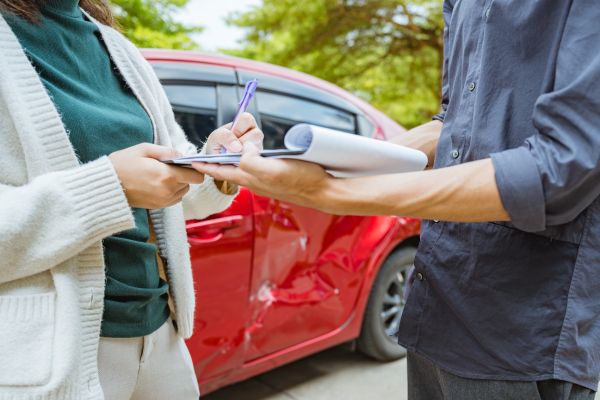
The Quiet Danger of Side-Impact Collisions
Side-impact accidents have a way of catching people off guard. Unlike head-on or rear-end crashes, where drivers often have a split second to brace or react, these collisions tend to happen in an instant—at intersections, in parking lots, or during a seemingly routine lane change. One moment everything feels normal, and the next, a vehicle appears from the side with little warning.
What makes side-impact accidents particularly unsettling is how exposed occupants are. The sides of most vehicles simply don’t offer the same level of protection as the front or rear. Even with modern safety improvements, the margin between a close call and a serious injury can feel uncomfortably thin.
How Side-Impact Accidents Typically Happen
Most side-impact accidents occur at intersections. A driver may run a red light, misjudge a turn, or fail to yield. These situations create a crossing path where one vehicle strikes another at a right angle—often referred to as a “T-bone” collision.
But intersections aren’t the only setting. Side-impact accidents can also happen during merging on highways, when drivers drift out of their lanes, or when visibility is limited by weather, parked vehicles, or poorly designed roads. In some cases, distraction plays a role. A quick glance at a phone or a moment of inattention is all it takes.
There’s a certain unpredictability to these crashes. They don’t always involve high speeds, yet the consequences can still be severe because of the direct impact to the passenger area.
Why These Accidents Can Be So Severe
The human body isn’t built to absorb sudden lateral force. When a vehicle is struck from the side, the distance between the point of impact and the occupant is minimal. There’s less structure to absorb energy, which means more of that force is transferred directly to the people inside.
In a front-end collision, the engine compartment and crumple zones help dissipate energy. In side-impact accidents, that protective buffer is significantly reduced. Even with side airbags and reinforced doors, the protection is not absolute.
Passengers seated on the side of impact are particularly vulnerable. The impact can push the door inward, causing injuries that range from fractures to internal trauma. It’s not uncommon for these collisions to result in more serious outcomes than one might expect based on speed alone.
The Role of Vehicle Design and Safety Features
Over the years, vehicle manufacturers have made notable progress in addressing the risks associated with side-impact accidents. Side airbags, curtain airbags, and reinforced frames have become more common, offering an added layer of protection.
Still, safety features have limitations. They reduce risk, but they don’t eliminate it. The effectiveness of these systems often depends on factors like the angle of impact, the speed involved, and whether occupants are properly restrained.
Seatbelts remain one of the most important safety tools, even in side-impact scenarios. While they are often associated with frontal crashes, they help keep occupants in position, reducing the likelihood of being thrown against the door or into another passenger.
Human Factors Behind Side-Impact Accidents
Behind many side-impact accidents is a human decision—or sometimes, a lapse in judgment. Running a red light, failing to check blind spots, or assuming another driver will yield can all lead to dangerous outcomes.
Fatigue and distraction also play a significant role. Modern driving environments are filled with potential interruptions, from smartphones to in-car technology. When attention shifts away from the road, even briefly, the risk of missing a critical moment increases.
There’s also the issue of overconfidence. Drivers who are familiar with a particular route may become less vigilant, assuming they know what to expect. Unfortunately, the road has a way of introducing the unexpected.
Emotional and Psychological Impact
Beyond the physical injuries, side-impact accidents often leave a lasting emotional impression. The suddenness of the event can be deeply unsettling. Many people describe a lingering sense of vulnerability, especially when driving through intersections or busy areas afterward.
Recovery isn’t always just about healing physically. It can involve regaining confidence behind the wheel, processing the shock of the experience, and adjusting to changes in daily life. These aspects are sometimes overlooked, but they are very real for those who have been through such an event.
Preventive Awareness on the Road
While no driver can control every variable on the road, awareness can make a meaningful difference. Approaching intersections with caution, even when the signal is green, is a small habit that can reduce risk. Taking a moment to scan both directions before proceeding may seem unnecessary—until it isn’t.
Maintaining a safe speed, especially in areas with frequent crossings, allows for better reaction time. Being mindful of blind spots and signaling intentions clearly can also help prevent misunderstandings between drivers.
Defensive driving isn’t about expecting the worst at every turn. It’s more about staying present, anticipating possibilities, and giving yourself enough space—both physically and mentally—to respond.
The Complexity of Determining Fault
Side-impact accidents often raise complicated questions about responsibility. Intersections, in particular, can be confusing environments with multiple signals, signs, and right-of-way rules. When something goes wrong, reconstructing what happened isn’t always straightforward.
Witness accounts, traffic camera footage, and physical evidence all play a role in understanding the sequence of events. Sometimes, multiple factors contribute to the outcome, making it difficult to assign clear-cut blame.
This complexity is one reason why these cases are often examined carefully. Each detail matters, from the timing of traffic signals to the positioning of vehicles before impact.
Long-Term Consequences and Recovery
The aftermath of side-impact accidents can extend far beyond the initial incident. Injuries may require ongoing treatment, and daily routines can be disrupted in ways that take time to adjust to. Even minor collisions can have ripple effects, influencing work, mobility, and overall well-being.
Recovery is rarely a straight line. Some days feel like progress, while others bring unexpected challenges. It’s a process that unfolds gradually, shaped by both physical healing and emotional resilience.
Support systems—whether family, friends, or professional care—often play a crucial role during this time. Having a network to lean on can make the journey feel less isolating.
Reflecting on Road Safety in Everyday Life
Side-impact accidents serve as a reminder of how quickly circumstances can change on the road. They highlight the importance of attention, patience, and respect for shared spaces. Driving is something many people do daily, often without much thought, yet it carries inherent responsibility.
There’s a quiet discipline in staying alert, in resisting distractions, and in recognizing that every intersection is a point of potential interaction. These habits don’t guarantee safety, but they contribute to a more mindful approach to driving.
Conclusion
Side-impact accidents are among the most unpredictable and, at times, severe types of road collisions. Their sudden nature and the vulnerability of vehicle occupants make them particularly concerning. While advancements in vehicle safety have improved protection, the human element remains a critical factor.
Understanding how these accidents happen—and why they can be so impactful—offers a chance to approach driving with greater awareness. It’s not about fear, but about attentiveness. In a world where movement is constant and roads are shared, even small moments of caution can carry significant weight.