

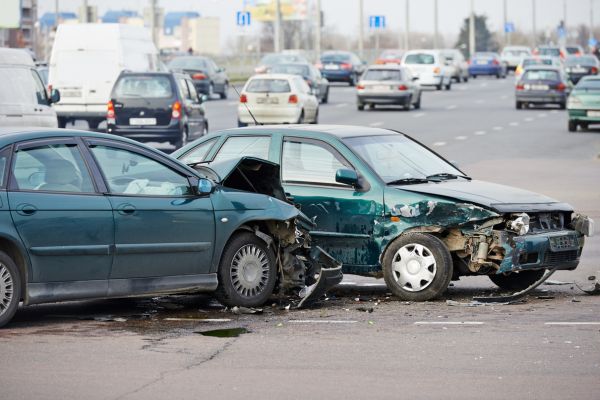
A T-bone collision can unfold in seconds and leave months, sometimes years, of consequences behind. One vehicle strikes the side of another, usually near an intersection, driveway, parking-lot exit, or uncontrolled crossing. The impact often reaches a passenger compartment with far less space between the occupant and the striking vehicle than there would be in a front- or rear-end crash.
That physical vulnerability is one reason T-bone car accident lawsuits can become complicated. Serious injuries may be involved, yet the drivers may offer completely different accounts of who entered the intersection first, who had the right of way, and whether a traffic signal changed moments before impact.
A lawsuit is not simply about showing that a side-impact crash occurred. The injured person generally needs evidence connecting another party’s conduct to the collision, the injuries, and the resulting financial losses. The exact rules depend on the state where the accident happened, so any discussion of these cases must remain general rather than replacing advice based on local law.
Why T-Bone Collisions Can Cause Serious Injuries
Modern vehicles contain crumple zones designed to absorb collision energy, but there is limited protective space along the sides of a passenger cabin. The location of the impact also matters. A strike directly beside a driver or passenger may expose that person to more immediate force than an impact farther away.
Federal vehicle standards include specific side-impact protection requirements, and side-curtain and torso airbags are designed to improve head and chest protection. Even so, airbags are supplemental safety devices and work most effectively alongside properly worn seat belts.
Injuries reported after side-impact crashes may involve the head, neck, back, chest, ribs, shoulders, hips, knees, and internal organs. Some symptoms are obvious at the scene. Others, including stiffness, headaches, dizziness, or worsening pain, may become more noticeable later.
The severity of an injury does not always match the outward appearance of the vehicle. A car may look repairable while an occupant faces a long recovery. This gap between visible property damage and personal harm can become an important issue during an insurance claim or lawsuit.
How Fault Is Determined After an Intersection Crash
Many T-bone cases begin with a straightforward question: which driver had the right of way? The answer, however, is not always straightforward.
A driver may have entered on a green light while another ran a red signal. Someone turning left may have crossed in front of oncoming traffic. A driver leaving a side street may have failed to stop, or a motorist may have accelerated through an intersection after the light changed.
Traffic violations can provide strong evidence of negligence, but the entire sequence still matters. A driver with the right of way may have been speeding, distracted, impaired, or driving without headlights after dark. In some cases, both drivers may share responsibility.
Fault may also extend beyond the two motorists. A vehicle owner, employer, government agency, road contractor, or automotive manufacturer could become relevant when the evidence points to negligent entrustment, work-related driving, obstructed signals, dangerous road design, or defective vehicle components. These situations require more than assumptions; they depend on the facts and the law governing the particular claim.
Evidence Can Shape the Entire Case
T-bone car accident lawsuits often turn on evidence that disappears quickly. Vehicles are repaired or destroyed. Surveillance systems overwrite recordings. Skid marks fade. Witnesses forget details, and damaged traffic signs may be replaced.
The police report is usually an important starting point, but it is not necessarily the complete story. Photographs of vehicle positions, impact points, road markings, traffic lights, debris, weather conditions, and visible injuries can help reconstruct what occurred.
Nearby businesses, homes, buses, or traffic-management systems may have captured video. Dashcam footage can be especially useful when the drivers disagree about the signal or the order in which they entered the intersection.
Witness statements matter as well. An independent person who saw a driver run a light may carry more weight than either driver’s unsupported version. Vehicle event data, phone records, repair inspections, and accident-reconstruction analysis may also become relevant in disputed or severe cases.
Medical evidence serves a different purpose. It connects the crash to diagnosed injuries, treatment, physical limitations, and expected recovery. Gaps in care can create questions, although legitimate reasons such as cost, transportation difficulties, or delayed symptoms may explain them.
Comparative Fault Can Reduce or Prevent Recovery
A person does not always need to be entirely blameless to pursue compensation. Many states use some form of comparative fault, but the rules vary considerably.
Under New York law, for example, a claimant’s share of culpable conduct generally reduces the damages rather than automatically eliminating recovery. Florida applies a different approach to many negligence actions: a party found more than 50 percent responsible for their own harm may be barred from recovering damages.
These differences can have a major effect on T-bone cases. Imagine that one driver failed to yield while the other was traveling above the speed limit. A jury might conclude that both actions contributed to the collision or its severity. The percentage assigned to each driver could determine how much, or whether, the injured person recovers.
Because comparative-fault systems are state-specific and subject to exceptions, generic online explanations should never be treated as a final calculation of legal rights.
The Losses Considered in a T-Bone Accident Claim
Compensation in a car accident case is intended to address losses caused by the collision, not simply to punish the other driver. The available categories and proof requirements depend on local law.
Medical losses may include emergency transportation, hospital treatment, imaging, surgery, medication, rehabilitation, follow-up care, and reasonably anticipated future treatment. When injuries affect employment, a claim may also involve lost wages, reduced hours, missed opportunities, or diminished future earning capacity.
Property damage commonly includes vehicle repairs, replacement value when the car is declared a total loss, towing, storage, and sometimes loss-of-use expenses.
Noneconomic damages may address pain, emotional distress, disability, scarring, inconvenience, and loss of enjoyment of ordinary activities. These losses are less visible than a hospital invoice, so medical records, personal testimony, photographs, employment records, and accounts from family members may help explain their real effect.
In fatal collisions, eligible relatives or estate representatives may have wrongful-death or survival claims. The rules controlling who may file and what losses may be recovered differ from state to state.
Insurance Negotiations Often Come Before a Lawsuit
Not every T-bone claim reaches a courtroom. Many begin and end through insurance negotiations. A claim may be presented to the at-fault driver’s liability insurer, while the injured person’s own policy may provide medical, collision, personal injury protection, or uninsured and underinsured motorist benefits.
Insurance adjusters investigate fault, review medical documentation, assess vehicle damage, and estimate potential exposure. They may dispute whether treatment was necessary, argue that a pre-existing condition caused some symptoms, or assign partial fault to the injured driver.
An early settlement may seem appealing when bills are accumulating. The difficulty is that a settlement usually closes the claim permanently. Once accepted and released, additional compensation may be unavailable even if symptoms worsen or future treatment becomes necessary.
This makes the timing of a resolution important. A fair evaluation is difficult when the medical outlook is still uncertain.
Filing Deadlines Should Never Be Assumed
Every state imposes time limits on civil claims, commonly called statutes of limitations. The period may depend on whether the case concerns personal injury, property damage, wrongful death, a minor, an unidentified driver, or a government vehicle.
New York, for example, generally provides a three-year period for many personal-injury actions. Yet claims involving public entities can require much earlier action; certain New York municipal tort claims may require notice within 90 days. Other states use different deadlines and exceptions.
Waiting is risky even when the formal filing date appears distant. Evidence can disappear long before the limitation period expires. Prompt investigation is often as important as meeting the final court deadline.
What Happens Once a Lawsuit Is Filed
A lawsuit normally begins with a complaint describing the accident, alleged wrongdoing, injuries, and requested relief. The defendant responds, and both sides enter discovery, the evidence-gathering stage.
Discovery may include written questions, document requests, medical examinations, depositions, expert opinions, and inspection of the vehicles. The parties may ask the court to decide certain legal issues before trial. Settlement discussions can continue throughout the process, and mediation may help narrow or resolve the dispute.
When no agreement is reached, the case may proceed to trial. A judge or jury then evaluates credibility, fault, causation, and damages. Litigation can be demanding, but the process exists to test both sides’ claims against evidence rather than assumptions.
Understanding the Road From Impact to Resolution
T-bone car accident lawsuits are shaped by more than the angle of impact. Traffic rules, driver behavior, medical evidence, insurance coverage, state fault laws, filing deadlines, and the long-term effects of injury all influence the outcome.
The strongest understanding begins with careful documentation and realistic expectations. A dramatic collision does not automatically establish legal responsibility, just as modest vehicle damage does not automatically mean minor injury.
Ultimately, these cases are about reconstructing a few critical seconds and measuring the consequences that followed. When the evidence is preserved and the applicable local rules are understood, the legal process can provide a structured way to determine responsibility and address the losses left behind.