

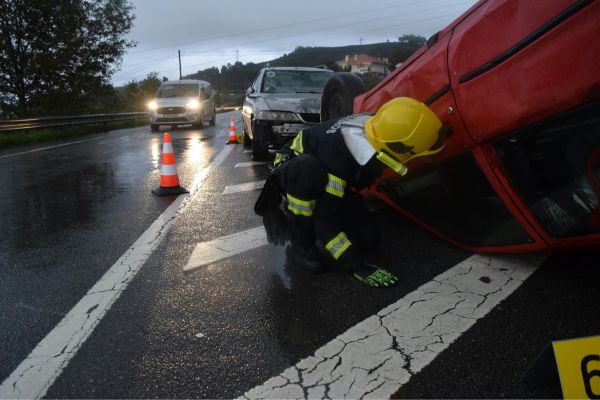
Understanding Why Rollover Accidents Are So Serious
Rollover accidents are among the most frightening types of crashes on the road. In a split second, a vehicle can lose balance, tip onto its side, flip onto its roof, or roll several times before coming to a stop. Even when the crash happens at moderate speed, the force involved can be violent. Glass shatters, metal bends, airbags deploy, and passengers may be thrown against the interior of the vehicle with little warning.
What makes rollover accidents especially dangerous is the loss of control. In a rear-end crash or side-impact collision, the direction of force is usually more predictable. A rollover is different. The vehicle may rotate, slide, strike another object, or land in a way that causes severe injury. People inside the vehicle often have only seconds, or less, to react.
Although any vehicle can roll over under the wrong conditions, taller vehicles such as SUVs, vans, and pickup trucks are more vulnerable because of their higher center of gravity. Still, road design, driver behavior, weather, tire condition, and even vehicle defects can all play a role. That is why understanding how rollovers happen is important for drivers, passengers, and anyone trying to make sense of a serious crash afterward.
How Rollover Accidents Commonly Happen
Most rollover accidents do not happen randomly. They usually involve a chain of events. A driver may swerve suddenly to avoid an animal, another car, road debris, or a stopped vehicle. The tires may grip too sharply, causing the vehicle to tip. In other cases, the vehicle may leave the road, hit a curb, slide into a ditch, or strike a guardrail at an angle.
One common type is a “tripped” rollover. This happens when a vehicle’s tires hit something that interrupts its movement, such as a curb, soft shoulder, uneven pavement, or median. The forward motion continues, but the obstacle catches the wheels or lower part of the vehicle. That force can cause the vehicle to roll.
There are also untripped rollovers, though they are less common. These may happen when a vehicle takes a turn too fast or makes a sudden steering correction at highway speed. The weight shifts quickly, the tires lose stability, and the vehicle tips without striking an outside object first.
Speed often makes the outcome worse. A fast-moving vehicle has more energy, which means the rollover may involve multiple rotations or a harder landing. But speed is not the only factor. Sometimes a driver traveling within the speed limit can still roll over because of poor weather, sharp curves, unsafe road shoulders, or another driver’s careless movement.
The Role of Vehicle Design and Road Conditions
Vehicle design matters more than many people realize. A vehicle with a higher center of gravity is naturally less stable during sudden turns. This does not mean every SUV or truck is unsafe, but it does mean these vehicles respond differently during emergency maneuvers compared with lower passenger cars.
Tire condition is another key issue. Underinflated, worn, or defective tires can reduce control and increase the risk of a rollover. A tire blowout at highway speed can be especially dangerous because the driver may instinctively overcorrect, pulling the vehicle sharply in the opposite direction. That sudden movement can shift the vehicle’s weight and lead to a flip.
Road conditions also deserve attention. Uneven shoulders, missing warning signs, poorly designed curves, potholes, loose gravel, standing water, and weak guardrail placement can all contribute to rollover crashes. A driver may make a normal correction after drifting slightly off the road, only to find that the shoulder drops off too steeply. That quick attempt to re-enter the lane can cause the vehicle to swing sideways and roll.
In many rollover accidents, there is more than one cause. A driver may have been distracted, but the road may also have been poorly maintained. A vehicle may have been moving too fast for conditions, but a defective tire may have made recovery impossible. Looking at the whole picture matters.
Injuries Often Linked to Rollover Accidents
The injuries from rollover accidents can be severe because the body is exposed to force from several directions. Passengers may hit the roof, doors, windows, dashboard, or seats. If a seat belt is not worn, the risk of ejection becomes much higher. Even partial ejection, where part of the body is thrown outside the vehicle, can cause life-threatening harm.
Head and brain injuries are common concerns. A person may suffer a concussion, skull injury, or traumatic brain injury after striking the roof or window. Neck and spinal injuries can also happen when the vehicle lands upside down or twists violently. These injuries may not always be obvious right away, especially when adrenaline masks pain.
Broken bones, shoulder injuries, rib fractures, internal bleeding, cuts from shattered glass, and crush injuries may also occur. In some cases, survivors deal with long-term pain, limited movement, emotional distress, anxiety while driving, or sleep problems after the crash.
It is also important to remember that not every injury appears at the scene. Someone may walk away feeling shaken but mostly fine, only to develop headaches, back pain, dizziness, numbness, or confusion hours later. After a rollover, getting medical attention is not just cautious. It can be essential.
Why Seat Belts and Roof Strength Matter
Seat belts make a major difference in rollover accidents. They help keep occupants inside the vehicle and reduce the chance of being thrown around the cabin. In a rollover, staying in the seat can be the difference between surviving with injuries and facing a much more serious outcome.
Roof strength is another major safety factor. When a vehicle rolls onto its roof, the structure must protect the people inside. If the roof crushes too far inward, occupants may suffer head, neck, or spinal injuries. Modern vehicles are designed with safety standards in mind, but questions can still arise after a serious crash. Was the roof strong enough? Did the airbags work correctly? Did the seat belt lock as it should? Did a defect make the injuries worse?
These questions are not always easy to answer without a careful investigation. Photos, vehicle inspections, crash reports, witness accounts, and expert analysis can help explain what happened.
What To Do After a Rollover Crash
The moments after a rollover can feel confusing and unreal. If you are able to move safely, checking for injuries and calling emergency services should come first. A rolled vehicle may be unstable, fuel may be leaking, or traffic may still be moving nearby. Trying to climb out too quickly can sometimes create more danger, especially if the vehicle is resting in a risky position.
Medical care should come next, even if the injuries seem minor. Rollover crashes involve intense force, and symptoms can be delayed. A doctor’s evaluation can identify problems that may not be visible at first.
If it is safe, photographs of the scene can be helpful. Images of the vehicle, road surface, skid marks, traffic signs, weather conditions, guardrails, tires, and nearby hazards may later help explain the crash. Witness contact information can also be valuable because memories fade quickly after an accident.
It is usually wise to avoid guessing about fault at the scene. A driver may feel responsible simply because they lost control, but the actual cause may involve another vehicle, a dangerous road condition, a defective tire, or a mechanical failure. Rollover accidents are often more complicated than they first appear.
How Fault Is Examined in Rollover Accidents
Determining fault in rollover accidents requires looking beyond the final position of the vehicle. Investigators may examine speed, steering movement, braking, tire marks, road design, vehicle maintenance, weather, visibility, and whether another driver caused a sudden maneuver.
For example, a driver may roll over after swerving to avoid a car that drifted into their lane. Another crash may involve a commercial vehicle dropping debris onto the road. In a different case, a tire defect or faulty suspension part may have contributed. Sometimes, poor road maintenance or a missing warning sign may be part of the story.
This is why rollover claims can be detailed and technical. The crash may not have a simple explanation. People often assume rollovers are always caused by reckless driving, but that is not always true. A careful review can reveal factors that were not obvious in the first report.
Why Legal Guidance May Become Important
After a serious rollover, people often face more than physical pain. Medical bills arrive. Work may be missed. Insurance companies may ask for statements. The damaged vehicle may be gone before anyone has properly inspected it. Families may be trying to understand what happened while also dealing with stress, fear, and financial pressure.
This is where legal guidance can matter, especially in crashes involving serious injuries, disputed fault, commercial vehicles, road hazards, or possible vehicle defects. Car accident lawyers near you may help review evidence, communicate with insurance companies, preserve important records, and determine whether more than one party may be responsible.
That does not mean every rollover case becomes a lawsuit. Many do not. But understanding your options can prevent mistakes, especially when injuries are serious or the cause of the crash is unclear. A calm, informed approach is better than rushing through paperwork without knowing the full impact of the accident.
Preventing Rollover Accidents on Everyday Roads
Not every crash can be avoided, but drivers can reduce rollover risk with steady habits. Slowing down on curves, avoiding sudden steering corrections, keeping tires properly inflated, replacing worn tires, and giving extra space in bad weather all help. Loading a vehicle carefully also matters. Heavy items placed high in an SUV, van, or truck can raise the center of gravity and make the vehicle less stable.
Drivers should also be cautious on rural roads, where rollovers are more common because of higher speeds, narrow lanes, soft shoulders, and fewer barriers. A moment of distraction can lead to a tire leaving the pavement. The natural reaction is to jerk the wheel back, but that can be dangerous. A slower, controlled correction is usually safer than a sharp turn.
Awareness is not about fear. It is about respect for how quickly vehicle stability can change. Most people never expect a normal drive to turn into a rollover, but preparation and careful driving can lower the risk.
A Clearer View of Rollover Accidents
Rollover accidents are frightening because they combine speed, force, instability, and uncertainty. They can happen because of driver error, road conditions, vehicle design, defective parts, or the actions of another motorist. Often, several factors overlap, making the crash more complex than it appears at first.
For those involved, the aftermath can feel overwhelming. Injuries may take time to fully appear. Questions about fault may remain unanswered. Insurance conversations may become stressful. Still, understanding how these crashes happen is a useful first step. It helps drivers stay safer, helps families ask better questions, and helps injured people recognize why careful documentation and proper support matter.
In the end, rollover accidents are not just dramatic events seen in crash reports or roadside wreckage. They are real incidents that can change daily life in an instant. Treating them with seriousness, patience, and clear information can make the road to recovery a little less uncertain.