

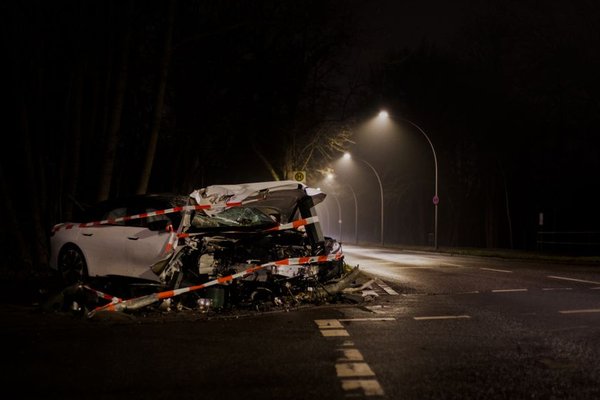
For most people injured in a Pennsylvania car crash, the key filing deadline is two years. Pennsylvania law generally gives a person two years to start a lawsuit seeking damages for personal injury caused by another person’s negligence, and the same period generally applies to damage to personal property. That makes the Pennsylvania car accident statute of limitations a deadline to treat as a hard stop, not a date to begin thinking about a claim.
The complication is that “two years” does not mean every deadline connected with a crash is two years. Insurance policies may require prompt notice, first-party benefits follow separate rules, government-related claims can trigger an earlier notice requirement, and some people may qualify for tolling. The right deadline depends on the type of claim and the facts.
The general two-year deadline
Under 42 Pa.C.S. § 5524, actions to recover damages for personal injury or death caused by negligence generally must be commenced within two years. The statute also applies a two-year limit to actions for injury to personal property. In an ordinary car accident case, the clock commonly begins when the crash and resulting injury or property damage occur.
For example, suppose a driver is injured in a collision on May 10, 2026. If no special rule changes the calculation, the personal injury lawsuit would ordinarily need to be commenced by May 10, 2028. Waiting until the last days is risky because identifying defendants, confirming insurance coverage, obtaining records, and preparing court papers can take time.
Settlement talks do not normally stop the pa injury filing limit. An insurer may continue negotiating while the deadline approaches, but an open claim file is not the same as a filed lawsuit. If the limitations period expires, the defendant may raise the statute of limitations as a defense.
The lawsuit deadline is not always the insurance deadline
Auto insurance policies commonly require an accident or claim to be reported promptly. Those contractual requirements may matter well before the Pennsylvania lawsuit deadline, so a driver should not assume that having two years to sue means it is safe to delay contacting an insurer.
Pennsylvania also has a separate rule for certain first-party motor vehicle benefits. Under 75 Pa.C.S. § 1721, an action for first-party benefits generally must be commenced within four years of the accident if benefits have not been paid. If benefits have been paid, an action for further benefits generally must be commenced within four years of the last payment. That is different from the standard two-year negligence deadline.
One crash can create several different claims
A driver may have a negligence claim against another driver, a property-damage claim for the vehicle, and a first-party benefits dispute with the driver’s own insurer. They arise from the same crash but can involve different filing time limits and notice rules. Related internal topics worth reviewing include Pennsylvania no-fault car insurance, what to do after a Pennsylvania car accident, and comparative negligence in Pennsylvania.
Situations that can change the normal timeline
Claims involving minors
Under 42 Pa.C.S. § 5533, the period of minority generally is not counted as part of the limitations period for an unemancipated minor’s civil action. A minor’s own injury claim may therefore have more time than an adult’s claim arising from the same crash.
That does not mean every claim connected with an injured child can wait. A parent may have separate claims or expenses governed by different timing rules. It is important to distinguish the child’s claim from claims belonging to an adult.
Claims involving a government unit
If a crash may involve a Pennsylvania government unit, timing can become much shorter. Under 42 Pa.C.S. § 5522, a person planning certain civil actions against a government unit for injury to person or property generally must provide written notice within six months. The statute contains specific requirements and exceptions.
This can matter when a Commonwealth agency, municipality, public vehicle, government employee, or potentially a roadway condition is involved. A person could still be within the ordinary two-year Pennsylvania accident claim deadline while already facing a problem under the separate six-month notice rule.
The discovery rule and tolling
Pennsylvania courts recognize a discovery rule in limited circumstances when, despite reasonable diligence, a person could not know that an injury occurred or that it was caused by another party’s conduct. It is fact-specific and is not an automatic extension just because an injury later becomes more serious than first expected.
Because most vehicle collisions involve an event that is immediately known, drivers should not assume the discovery rule will postpone the filing date. Other tolling provisions may apply in unusual cases, but relying on an exception without legal review is risky.
Fatal crashes need separate deadline review
Pennsylvania’s two-year statute includes actions for the death of an individual caused by another person’s wrongful act or negligence. However, wrongful-death and survival claims involve different legal interests, proper parties, and procedural requirements. A fatal-crash claim should not be treated as an ordinary injury case with the same checklist.
If a person dies after the accident rather than at the scene, record both the crash date and the date of death and review the claim promptly. Estate-related steps and the identity of the proper plaintiff can also affect how the case proceeds.
How to protect your filing timeline
Start by writing down the crash date and calculating two years forward as an initial working deadline for a typical negligence-based injury or property claim. Then check for facts that may create an earlier or different rule: a government entity, an injured minor, a death, first-party benefits, an out-of-state element, or an insurance-policy notice requirement.
Frequently asked questions
How long do I have to sue after a car accident in Pennsylvania?
For a typical negligence-based personal injury claim, Pennsylvania generally provides two years under 42 Pa.C.S. § 5524. Property-damage claims are also generally subject to a two-year period, although special facts can change the analysis.
Does an insurance claim stop the two-year clock?
Usually, no. Reporting a claim or negotiating with an insurer does not by itself stop the statute of limitations. An open insurance file should not be treated as a substitute for timely court action.
Is the deadline longer for an injured minor?
It can be. Pennsylvania generally excludes the period of minority from the limitations period for an unemancipated minor’s own civil claim, while related claims belonging to adults may follow different rules.
What if a government vehicle or agency was involved?
Act quickly. Pennsylvania law can require written notice within six months for certain claims against government units, in addition to other filing rules and exceptions.
Conclusion
The standard Pennsylvania car accident statute of limitations is generally two years for negligence-based personal injury and property-damage lawsuits, but that rule does not cover every deadline created by a crash. First-party benefits, government claims, minors, fatal accidents, policy notice provisions, and limited tolling doctrines can affect timing. Calculating the earliest possible deadline and checking claim-specific rules early is safer than assuming every Pennsylvania accident follows the same two-year clock.